
RIPPLES
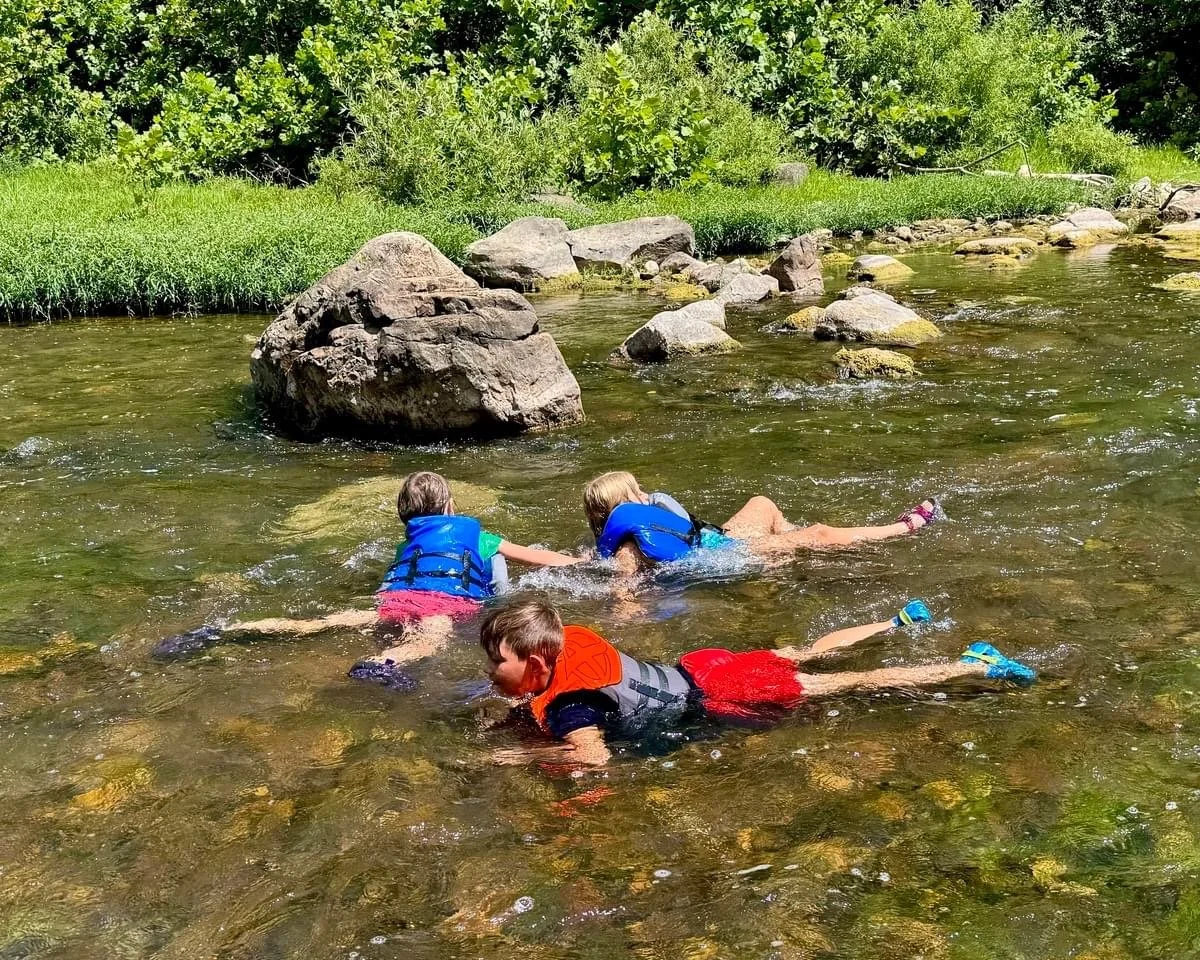
RIPPLES is Friends of the North Fork’s youth education program. You help students understand how their river works, why it matters, and how daily choices affect water quality in the North Fork watershed.
The program meets Virginia Department of Education Standards of Learning for watershed education and supports teachers with ready to use, hands on instruction tied to local conditions.
You bring RIPPLES to schools, community events, and education programs. You work directly with teachers to support classroom instruction or deliver standalone lessons tied to existing curriculum goals.
This program works because it stays local, measurable, and active. Students learn about the river they live near, not a generic watershed from a textbook. The river shows up in their school, their lessons, and their hands.
Launched at North Fork Middle School, a school named for the river itself.
RIPPLES has a four part focus.
Macroinvertebrates
Students investigate stream health by collecting and identifying aquatic insects using established freshwater monitoring methods. You guide students through hands on sampling, observation, and simple data recording tied to Virginia Save Our Streams protocols. Students learn how species diversity reflects water quality and how scientists use living indicators to track watershed health over time.
Enviroscape
Students use a hands on watershed model to see how water moves through land and communities. You simulate rain, add common pollutants, and watch how runoff carries them into streams and lakes. Students learn the water cycle, identify point and nonpoint source pollution, and explore best management practices that reduce pollution before it reaches the river.
Watershed Performance
Students explore how the North Fork watershed functions as a system. Lessons focus on the water cycle, streamflow, erosion, pollution sources, riparian buffers, and drinking water. This component includes Under Our Watershed Sky, a student led play where participants represent parts of the watershed, sources of pollution, aquatic organisms, and restoration actions. Students act out how pollution enters the river, how it affects living systems and people, and how monitoring and conservation restore balance.
North Fork Croquet
Students learn North Fork watershed geography through a full scale croquet course that maps the river from south to north. Each wicket represents a real tributary, starting at the German River and Crab Run and ending at the confluence of the North and South Forks.
Students play in teams, moving through tributaries in order. The game reinforces river flow direction, tributary connections, and place based learning through movement and collaboration.
Ready to schedule or have questions? Contact us.