
Water Monitoring
Testing the waters.
Benthic Macroinvertebrate Monitoring
Benthic macroinvertebrates, or BMIs, are small aquatic organisms that live on and around the stream bottom. Different organisms have different tolerances to pollution and changing water conditions, so the types and numbers we find help us understand stream health.
Friends participates in Virginia Save Our Streams. Our certified community scientists use standardized monitoring protocols to collect BMI data throughout the North Fork watershed and report their results to the Clean Water Hub.
Want to become a water monitor?
You do not need to be a scientist. Friends works with Virginia Save Our Streams to train community members to collect, identify, and report stream health data.
Already a Certified Monitor?
Before you head out, make sure your monitoring site is registered and you have the equipment you need. Friends has shared monitoring equipment available for our certified monitors.
After monitoring:
Submit your results to the Clean Water Hub.
Take a clear photo or scan of your completed datasheet.
Email your datasheet to monitor@fnfsr.org.
Friends will retain monitoring datasheets for at least five years.
More Monitor Resources
Salt Watch
Road salt helps keep roads safe in winter, but it doesn't always stay on the road. Chloride from road salt and other deicers can wash into streams and remain in our waterways throughout the year.
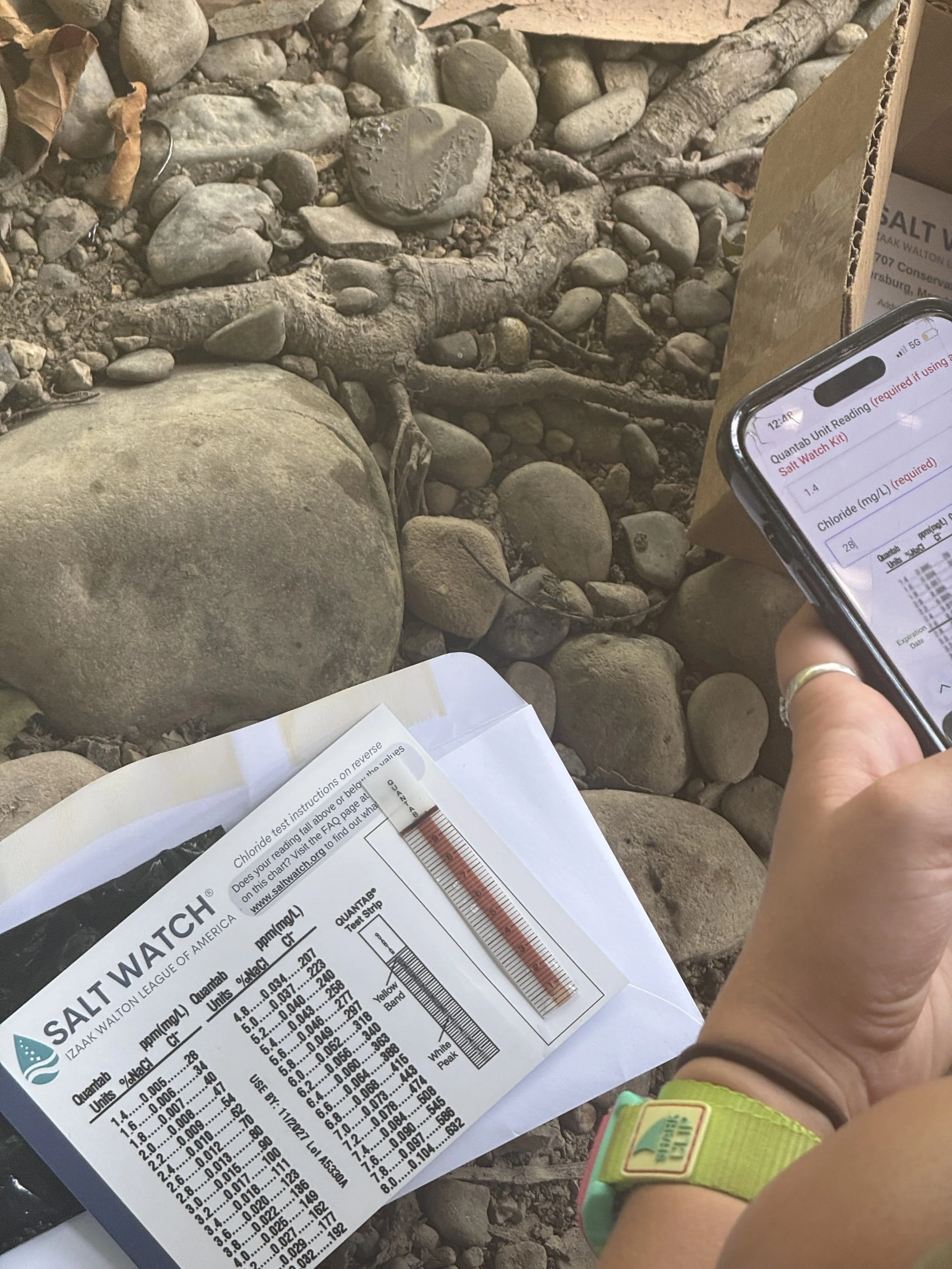
Through Salt Watch, North Fork Water Monitors test chloride levels in local streams and help us track where and when salt is affecting our watershed. Testing is quick, simple, and open to anyone.
When Should I Test?
You can test throughout the year. Regular testing helps us build a better picture of chloride levels over time.
Winter weather gives us some especially useful opportunities. Test before a winter storm, after road salt is applied, after snow or ice begins to melt, and after the next rain event.
Monitoring with Friends
Testing a North Fork waterway? We want your results.
Submit your Salt Watch results to the Clean Water Hub so they become part of the growing water-quality record for the North Fork watershed.
Need test strips, help choosing a site, or have a question? Email monitor@fnfsr.org.
Nitrate Watch
Nitrate occurs naturally in our environment, but too much can affect our waterways and drinking water. Fertilizer, manure, and sewage are common sources of excess nitrogen that can make its way into streams and groundwater.
Through Nitrate Watch, North Fork Water Monitors use simple test strips to track nitrate levels and help us build a better picture of water quality throughout the watershed.
How to Test
Choose your water source.
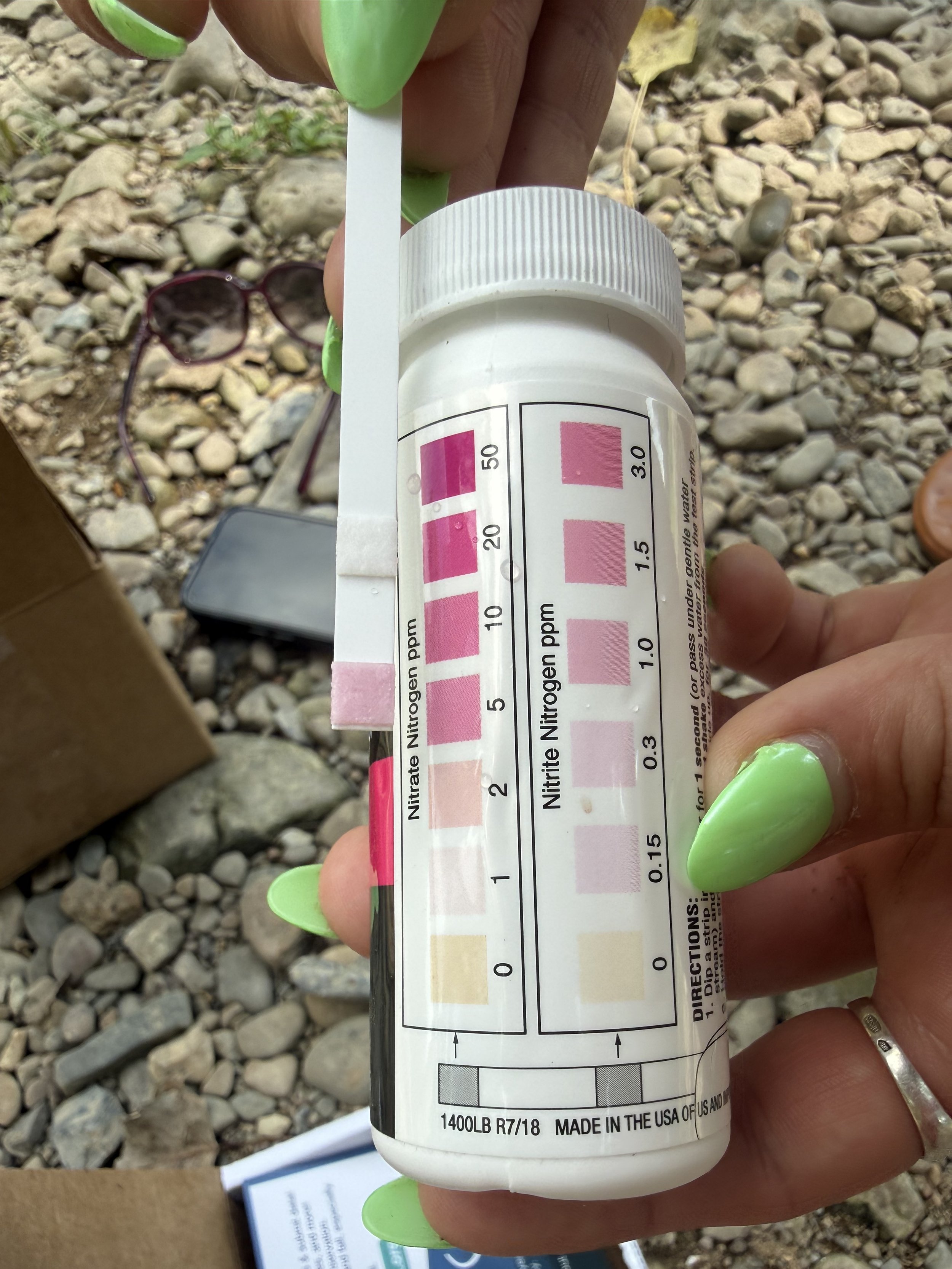
Dip the test strip in the water for 1 second.
Remove the strip. Do not shake off the excess water.
Hold the strip level with the test pad facing up for 30 seconds.
At exactly 30 seconds, compare the top test pad with the “Nitrate Nitrogen ppm” color chart on the bottle.
Record your result and submit it to the Clean Water Hub.
Monitoring with Friends
Submit your Nitrate Watch results to the Clean Water Hub so they become part of the growing water-quality record for the North Fork watershed.
Need test strips, help choosing a monitoring location, or have a question? Email monitor@fnfsr.org.